
Reference: Inspired by reporting from Reuters and Manager Magazin
.
TL;DR (The Gist)
- What happened: Volkswagen Group CEO Oliver Blume is reportedly drawing up a drastic plan to slash up to 100,000 jobs over the coming years to aggressively lower structural costs.
- The Target: The cuts aim to trim billions from the German automaker’s budget, targeting heavy inefficiencies in its core European manufacturing operations.
- Why it matters: As Chinese EV makers flood Europe with cheaper vehicles and lower labor expenses, Europe’s legacy auto industry is discovering it is structurally unfit to compete without extreme downsizing.
The News: A Massive Structural Overhaul
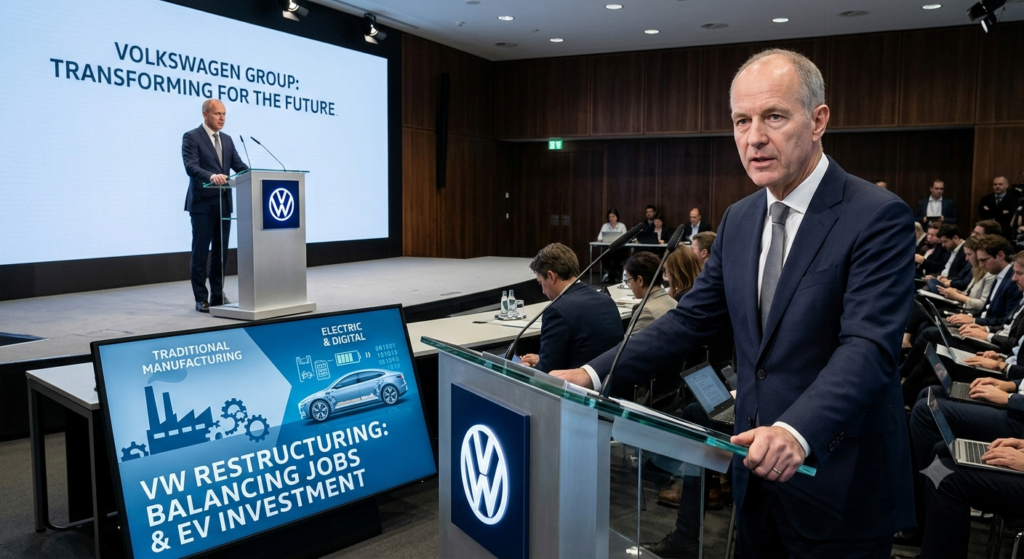
The European automotive world was hit with a sledgehammer on Friday. According to a report from Manager Magazin, Volkswagen Group CEO Oliver Blume is planning a historic reduction of up to 100,000 jobs in the next few years. The massive figure represents a deep corporate acknowledgment that Europe’s largest carmaker cannot survive in its current form.
Volkswagen’s core issue is simple: it costs too much money to build its cars. The corporate structure has become bogged down by bureaucracy, overlapping roles, and a massive legacy workforce designed for internal combustion engines rather than the streamlined processes required for Electric Vehicles (EVs). Blume’s plan focuses heavily on early retirement packages, voluntary buyouts, and structural consolidations to shrink the payroll without triggering an immediate, catastrophic clash with Germany’s powerful labor unions. While Volkswagen has declined to comment on the exact figure, internal insiders indicate that the math makes downsizing unavoidable.
Why This Matters ⭐
This isn’t just about one company. It is a terrifying window into the broader “de-industrialization” tension gripping the Western world.
- The Efficiency Gap: Traditional car factories require massive amounts of human labor to assemble complex gas-powered engines and transmissions. EVs require significantly fewer parts and less assembly labor. By cutting these jobs, VW is acknowledging that the future of manufacturing is leaner and more automated.
- The Chinese Inundation: Chinese brands (like BYD) can manufacture high-quality EVs for a fraction of the cost, largely because they control their entire supply chain and operate with dramatically lower labor overhead. For VW to price its cars competitively, it has no choice but to slash its internal expenses.
- The Union Collision: Germany’s economy runs on co-determination, meaning worker councils have a massive say in corporate decisions. If Blume pushes these 100,000 cuts too aggressively, it could trigger paralyzing strikes across Germany, severely interrupting current production lines and tanking the stock.
The Practical Angle: If you own shares of legacy automakers (Ford, GM, Stellantis, VW), understand that their balance sheets are entering a “danger zone.” These companies are being forced to spend billions retooling factories for EVs while simultaneously spending billions to buy out their old workforce. Look for companies that can execute these job cuts smoothly without destroying internal morale or causing prolonged factory shutdowns.